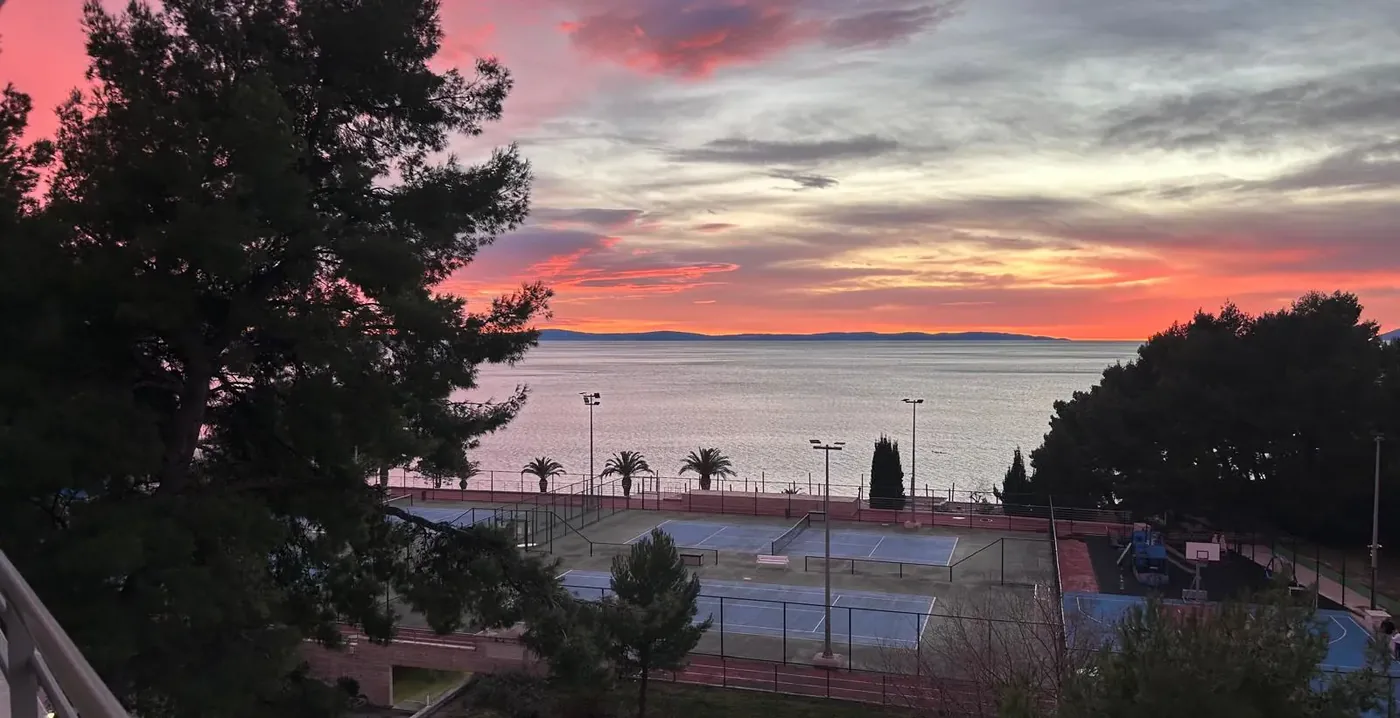












Balcony with garden view

Aspalathos Romantic Retreat
- Split
- 2 guests
- 1 bedroom
- 20 m²
Split is a city built inside a Roman palace, with the sea at the end of every street. This is our local guide to its neighbourhoods, beaches, islands and practicalities, with the stays we look after here.

A Roman emperor's palace that became a town, a promenade by the sea, beaches within walking distance and islands an hour away.
Split grew inside the palace that the Roman emperor Diocletian built by the sea around the year 300. When nearby Salona fell in the 7th century, its people took shelter within the walls, and the palace slowly became a town. Today its cellars, temples and Peristyle sit among homes, shops and cafés: a living old town on the UNESCO World Heritage List.
Most guests stay three to five days: two for the old town, Marjan and the beaches, and the rest for the islands, an hour or so away by ferry or catamaran. Split is also Croatia's second-largest city, so it stays lively all year, not only in summer.
Our stays are spread over five parts of the city and Podstrana, a little further down the coast. Choose by how close you want to be to the palace, and how close to the beach.
In and around Diocletian's walls
The old town grew in and around the palace of a Roman emperor, and people still live in it: washing hangs across the lanes and Roman columns are built into the houses. Our stays here sit just outside the walls, east by the market and north-west towards the theatre, so you step out of the door straight into the sights. Summer evenings are lively and deliveries start early; that comes with living in the old town.
Stone lanes below Marjan
West of the old town, Varoš and Veli Varoš were once the quarter of fishermen and farmers: low stone houses, steps and small courtyards climbing towards Marjan. It is quieter than the old town but full of konobas, the Dalmatian taverns, and the steps up to the first viewpoint start right here.
Villas, gardens and sea views
Meje runs along the southern foot of Marjan above the sea: villas in gardens, the Meštrović Gallery and quiet coves a few minutes away. The Riva is a pleasant walk along the water, and the beaches at Kaštelet and Ježinac are on your doorstep.
Beach life next to the centre
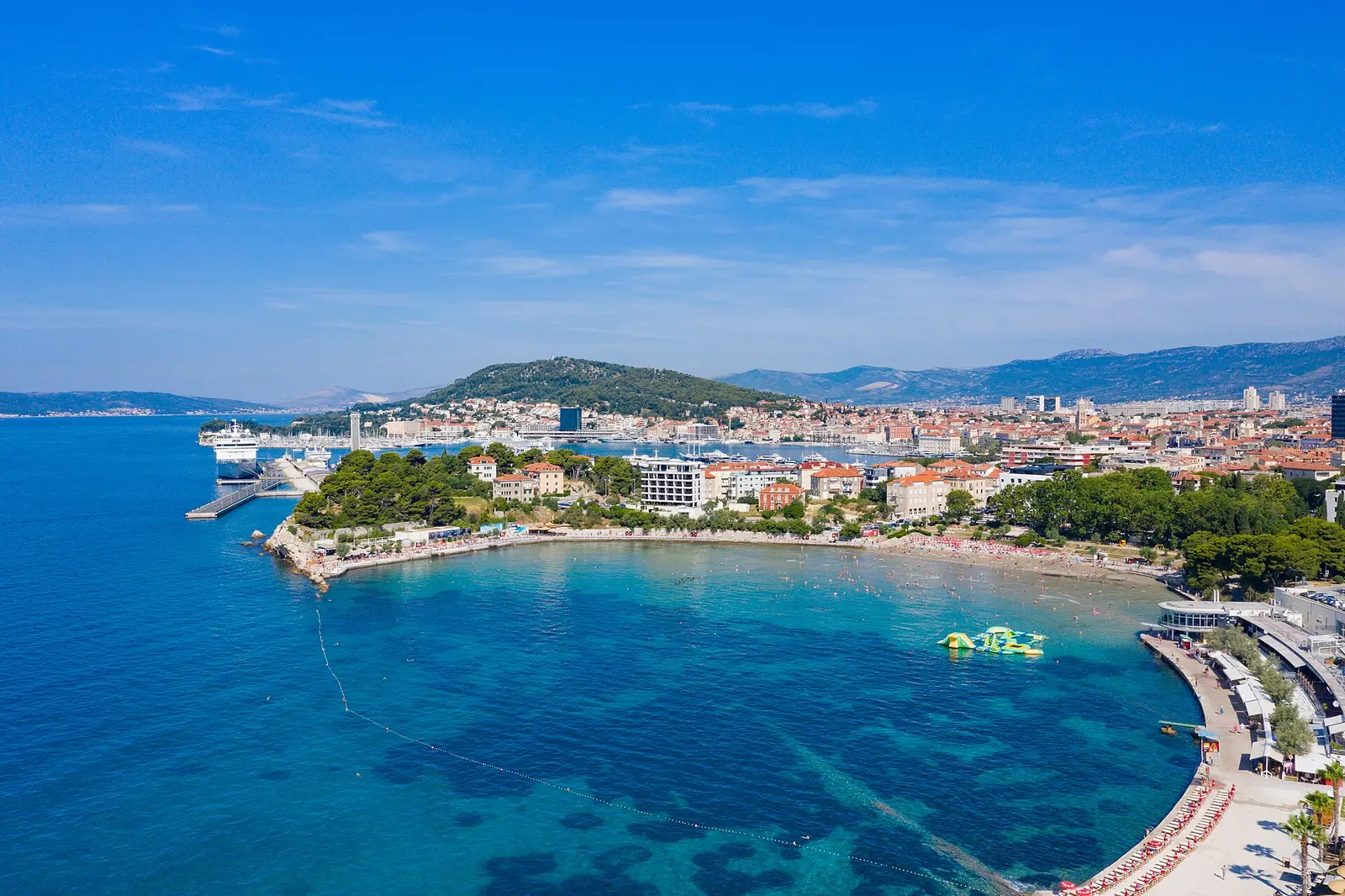
Past the train and bus stations the city turns to the sea: the sandy beach at Bačvice, the smaller bay of Firule and residential streets with bakeries and cafés. Swim before breakfast, then walk to the palace for dinner. Bačvice gets busy on summer nights.
Residential Split, with easier parking
Three of our stays are in the residential neighbourhoods north and east of the centre: Lovret, by the university campus, and the east side of the city towards Žnjan. You get local shops and bakeries, buses to the Riva and parking that is far easier to find.
A beach holiday down the coast
Podstrana is a seaside municipality about ten kilometres south-east of Split, stretched along a pebble shore below the Mosor mountains. Our two stays here are a few minutes' walk from the beach and both have parking. Bus 60 runs to Split along the coast road.
Walking times are from the Peristyle, the square at the heart of Diocletian's Palace. The first stops are all inside its walls.
The palace's columned courtyard, the heart of the old town. Every walk here starts or ends on its steps.
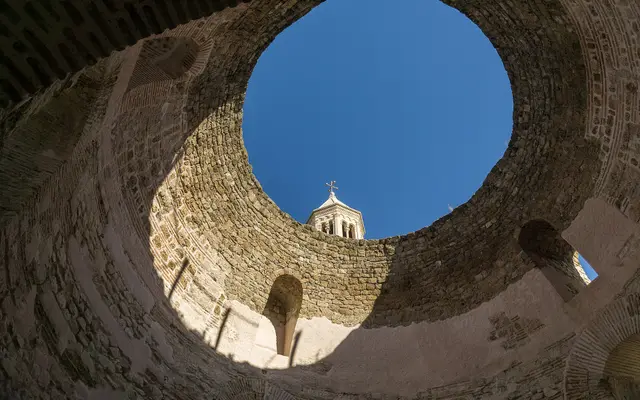
The domed hall that led into the emperor's private rooms. Its roof is open to the sky and its acoustics are famous: klapa singers made it their stage.
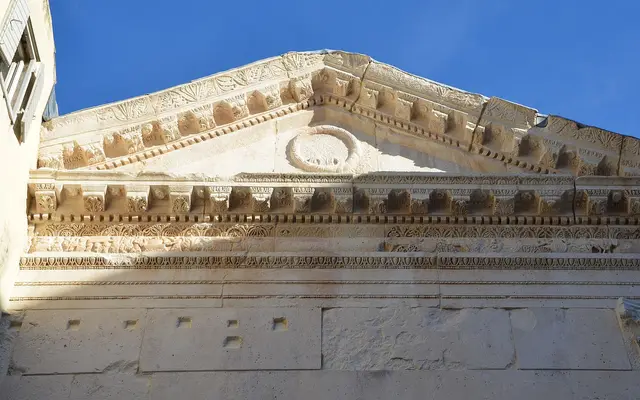
Diocletian's mausoleum, turned into a church in the 7th century, and its Romanesque bell tower, which you can climb for the view over the harbour.
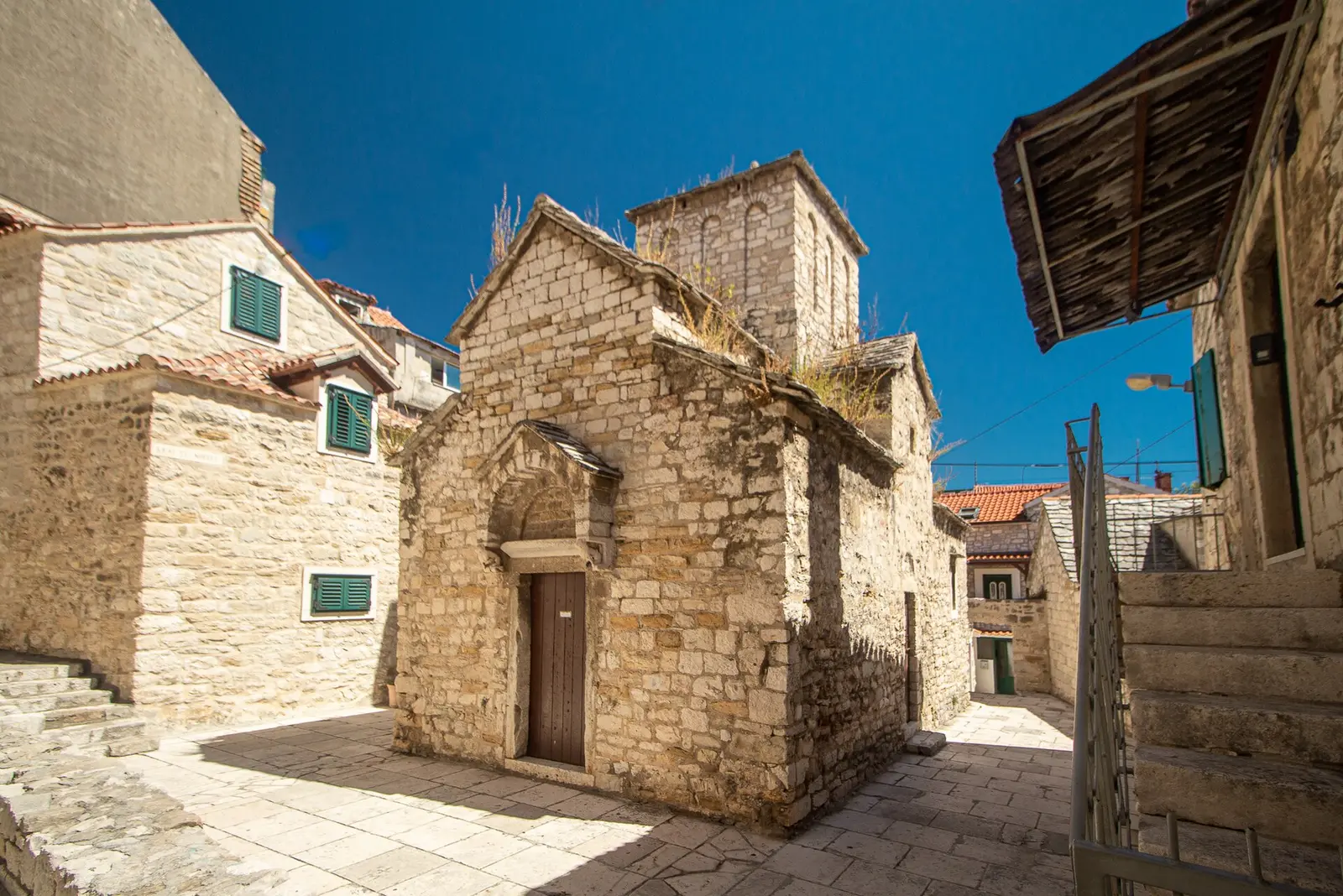
A small Roman temple, later a baptistery, at the end of a narrow lane off the Peristyle; a sphinx guards the entrance.
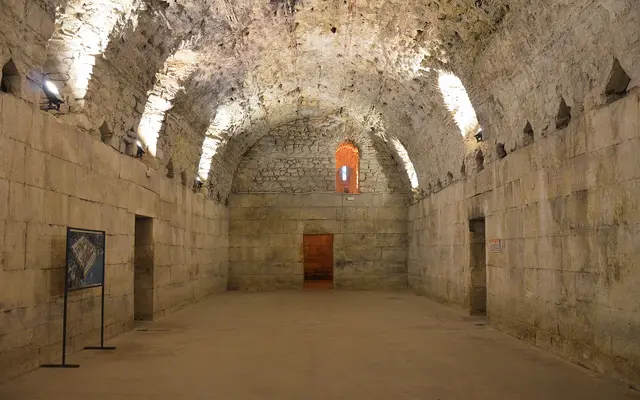
The vaulted halls under the palace, built to carry the emperor's rooms above. The central hall, lined with souvenir stalls, leads out to the Riva.
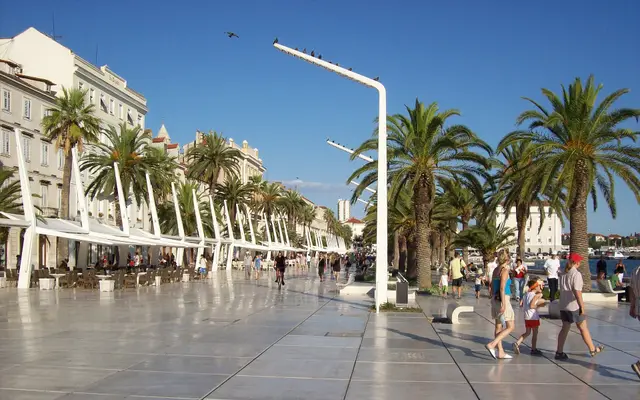
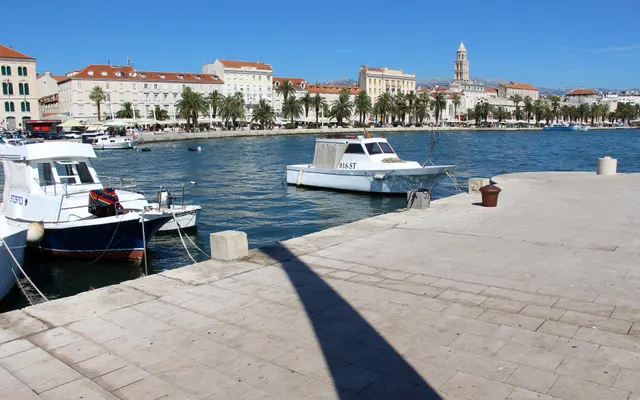
The palm-lined promenade along the palace's southern wall, the city's living room for morning coffee and evening walks.
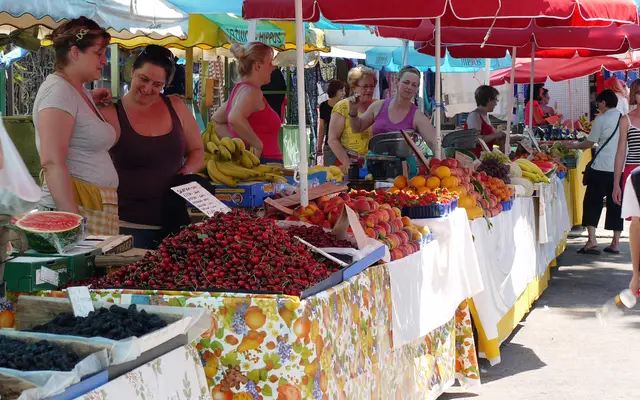
The open-air market outside the Silver Gate, the palace's eastern entrance: fruit, vegetables, flowers and cheese every morning.
The palace's grand northern gate. Outside stands Ivan Meštrović's giant statue of the medieval bishop; rubbing his big toe is said to bring luck.
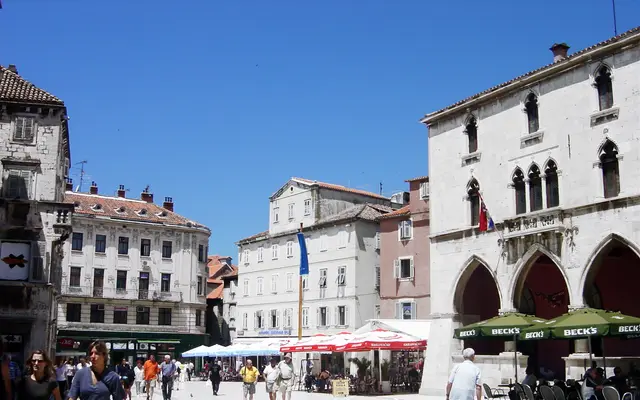
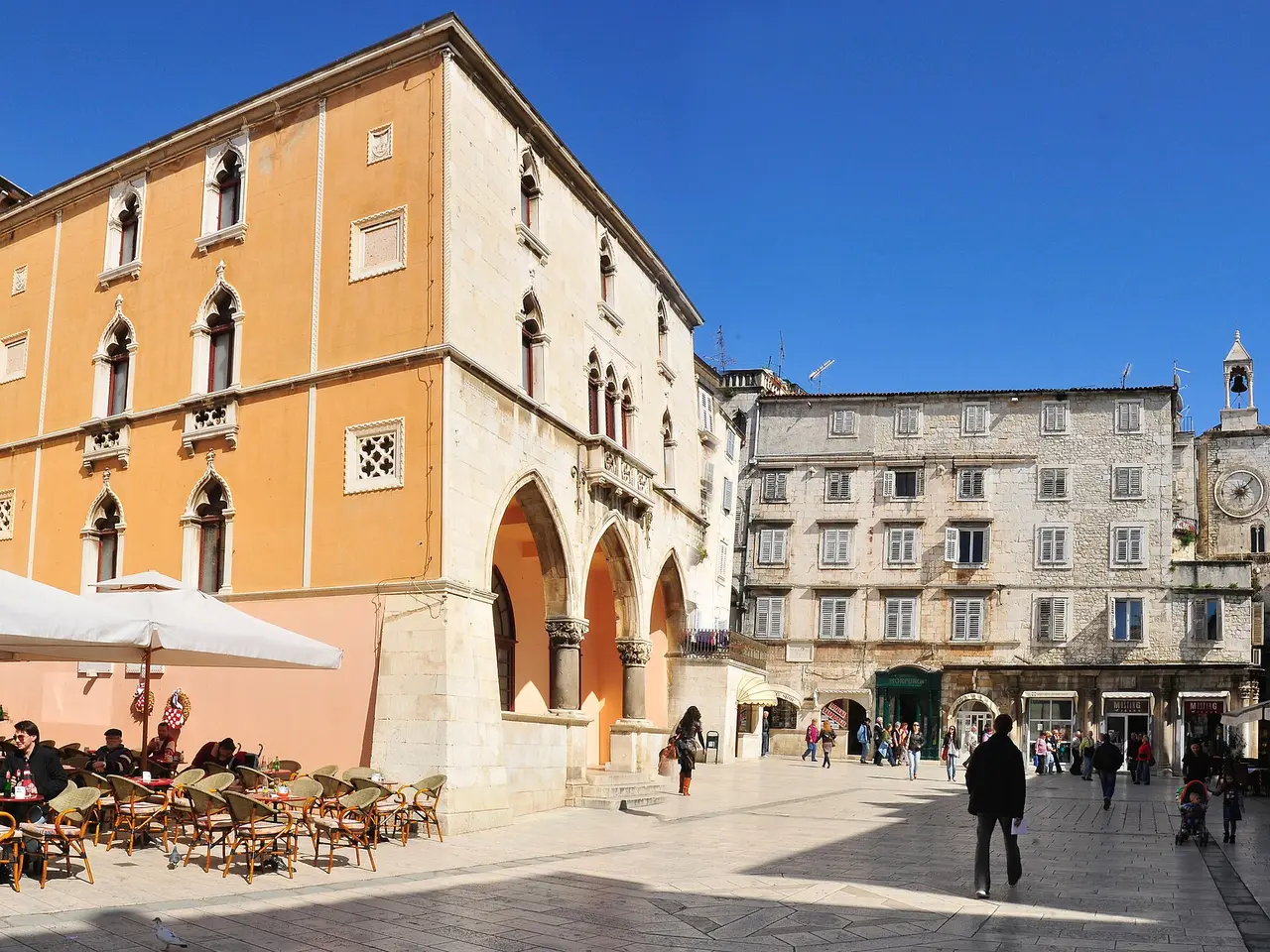
Through the Iron Gate, the city's main square since the Middle Ages, with the Gothic old town hall and café tables on white stone.
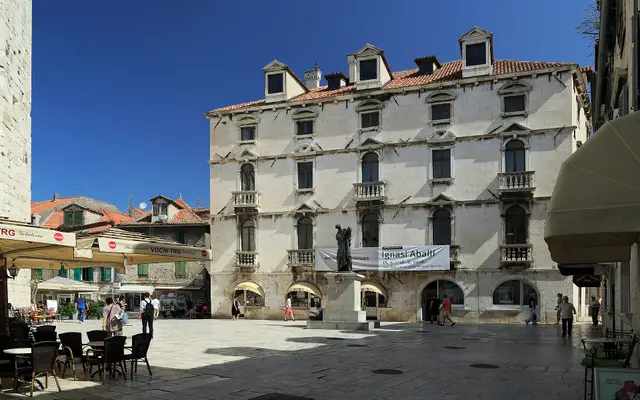
A small square by a tower of the old Venetian castle, with Meštrović's statue of Marko Marulić, the father of Croatian literature.
The morning fish market on the west side of the old town, under an iron roof. Come early for the best of the catch.
A 19th-century Neo-Renaissance square of red arcades, open to the sea and a stage for summer concerts.
The little fishermen's harbour at the west end of the Riva, where wooden boats tie up below Marjan and locals sit on the pier at sunset.
A quiet park of cypresses on a headland past the marina, once a monastery and later the city cemetery, with a pavilion and some of the best sunsets in Split.
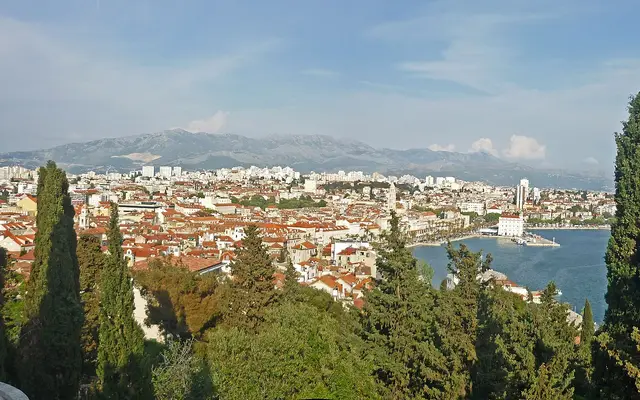
Stone steps climb from Varoš to the first viewpoint, with a café and the whole city below. Beyond it, Marjan is a forest park of pine paths, chapels and coves.
The sculptor Ivan Meštrović's summer villa below Marjan, now a museum of his work with a garden facing the sea. Kaštelet, his chapel of carved wooden reliefs, is a short walk on.
The ruins of the Roman city where Split began: an amphitheatre, basilicas and city walls among the fields of Solin.
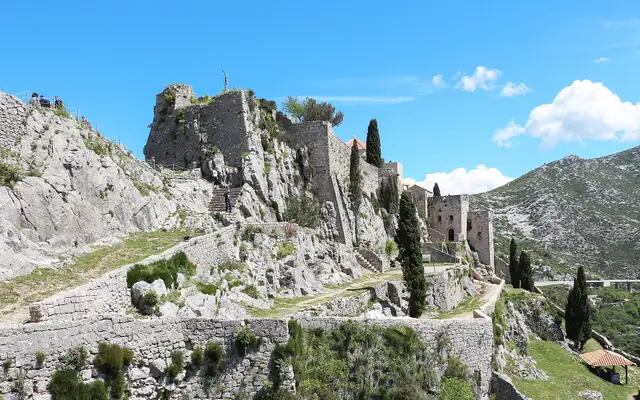
City bus 1 to Solin, about 30 minA fortress on a rock above the city that guarded the pass inland for centuries, with views over Split and the islands.
Bus 22 to Klis, about 30 minSplit is a city where people swim before work. Sand at Bačvice, pebbles and pine shade around Marjan, long pebble shores to the east. The numbers follow the coast from west to east.

On the north side of Marjan, inside the forest park: pebble coves in the shade of pines, with sports courts and a café.

A wide pebble bay below Marjan's southern cliffs, quieter than the city beaches and a favourite with locals.

Small pebble beaches below the Meštrović Gallery, on the walk along Marjan's southern side.

The city beach, sandy and shallow, just past the ferry port. It is the home of picigin, the game of keeping a small ball in the air with flat-handed passes, standing in the shallows.
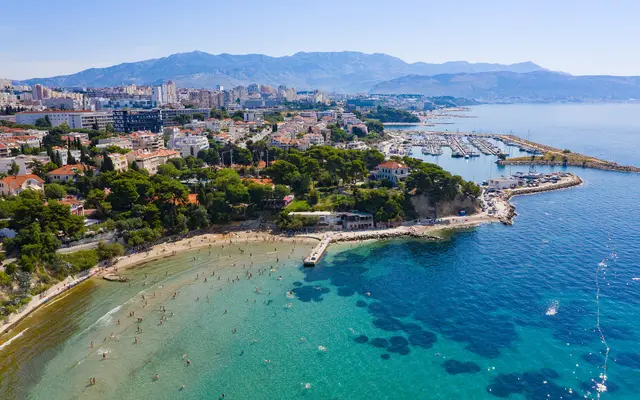
The next bay east of Bačvice, smaller and calmer, with shady trees behind the beach.
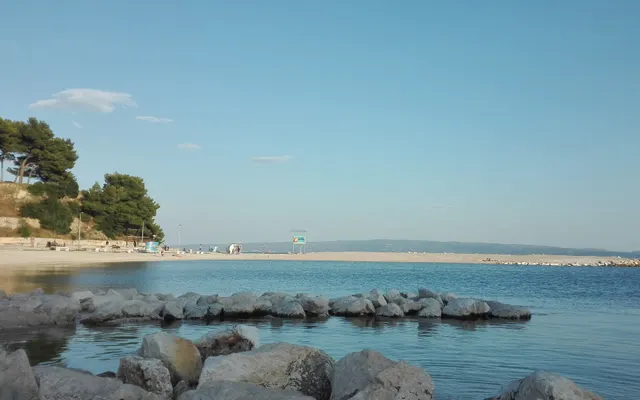
A long pebble beach east of Firule, calmer than Bačvice, with sun loungers, cafés and the seafront path running on to Žnjan.
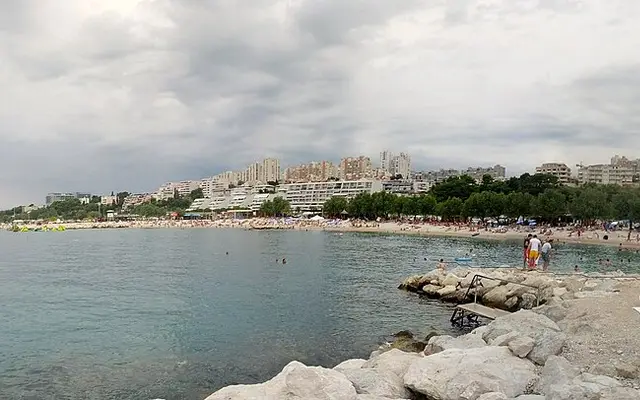
A long pebble beach east of the centre, with room to spread out, beach bars and a seafront promenade.

About ten kilometres down the coast: a long pebble shore with a seaside promenade, a few steps from our two Podstrana stays.
Split is the region's main ferry port. Brač, Hvar and Šolta are an hour or so away, and Trogir, Omiš and the Krka waterfalls are easy by road. Crossing times come from the operators' timetables.
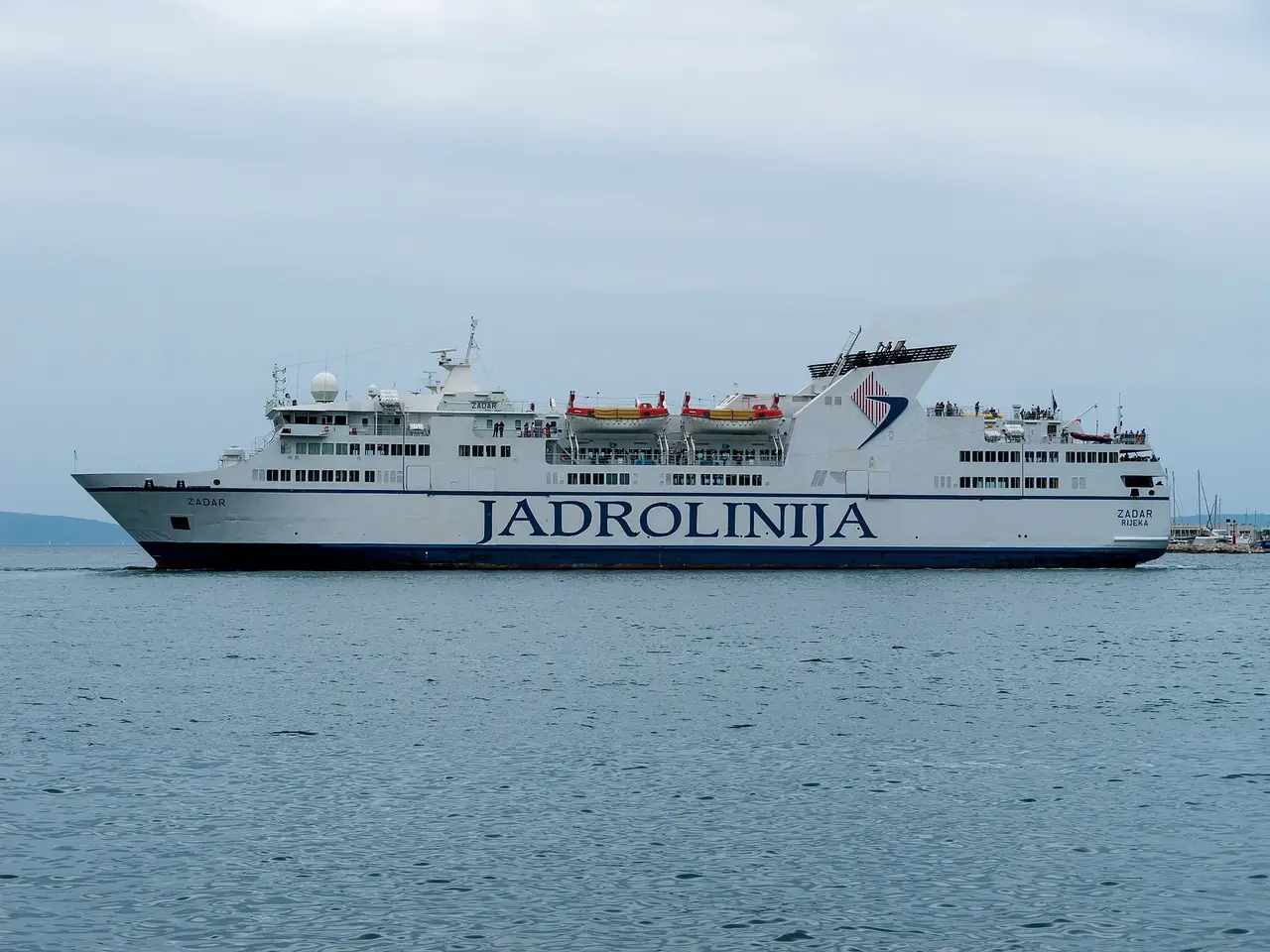
Ferries and catamarans leave from the quays next to the bus and train stations, a 10-minute walk from the Peristyle. Each line has its own berth, so check your ticket.
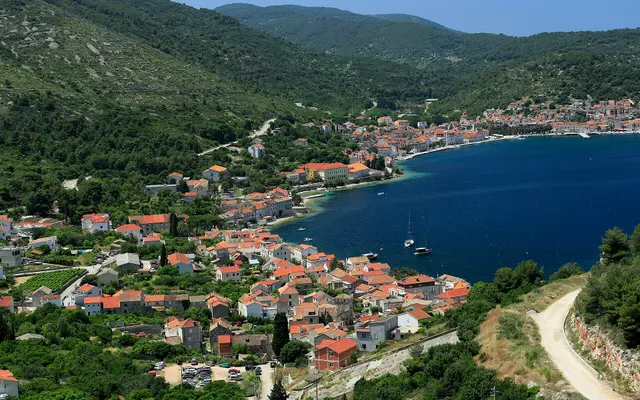
The nearest island town, with a harbour, pebble beaches and buses on to the rest of Brač.
Car ferry, all yearThe island's harbour town: a Venetian square, a fortress on the hill and the Pakleni islands offshore.
Catamaran, foot passengers onlyA quiet island just off Split, with olive groves, small bays and the village of Maslinica on its west coast.
Car ferry to RogačA shallow turquoise channel between the islet of Krknjaš and Drvenik Veli, made for swimming and snorkelling. Boat trips often add a stop at a shipwreck off Šolta.
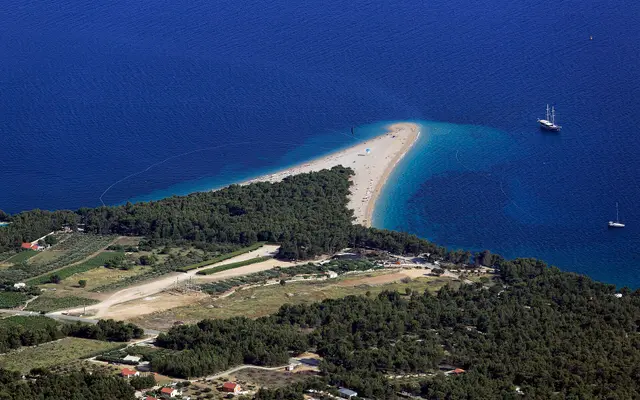
Boat trip, in seasonZlatni Rat, the pebble spit whose tip shifts with the wind and currents, below the highest peak of the Adriatic islands.
Catamaran, continuing to Jelsa on HvarA sea cave off Vis where, around midday, sunlight through an underwater opening turns the water blue. You reach it on an organised boat trip, usually combined with Hvar or Vis.
Speedboat trip, in seasonOne of the oldest towns in Europe, at the end of a long bay, beside the Stari Grad Plain, a UNESCO-listed landscape of ancient Greek fields.
Car ferryAn island out in the open sea, closed to foreign visitors for decades as a military base, with two harbour towns, Vis and Komiža.
Car ferry; catamarans are fasterSeven villages round the bay, each grown up around a castle built against the Ottomans; also the home of crljenak, the grape Californians call Zinfandel.
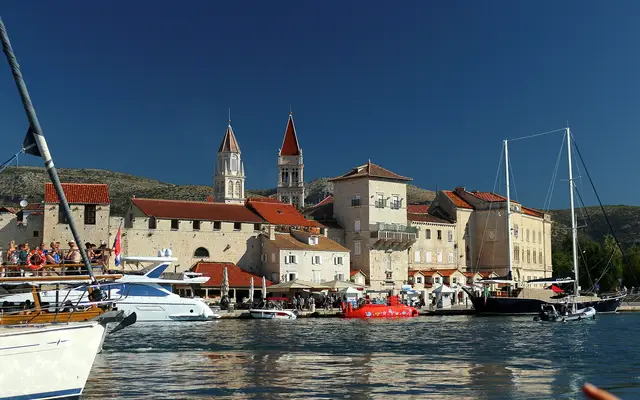
15 km · bus 37 or by carA medieval town on a small island, its whole historic centre on the UNESCO World Heritage List.
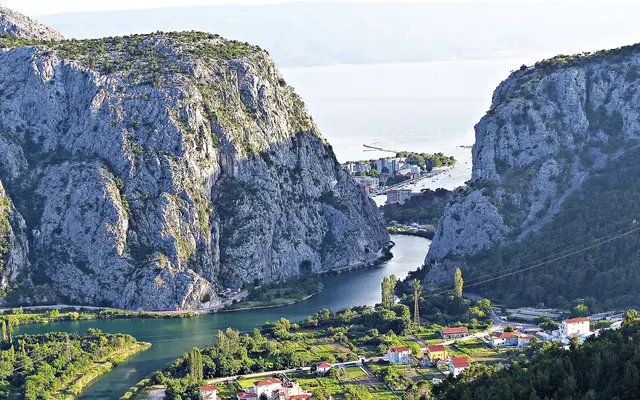
30 km · bus 37 or by carWhere the Cetina cuts through a canyon to the sea: rafting, kayaking and zip lines, and an old pirate town below the cliffs.
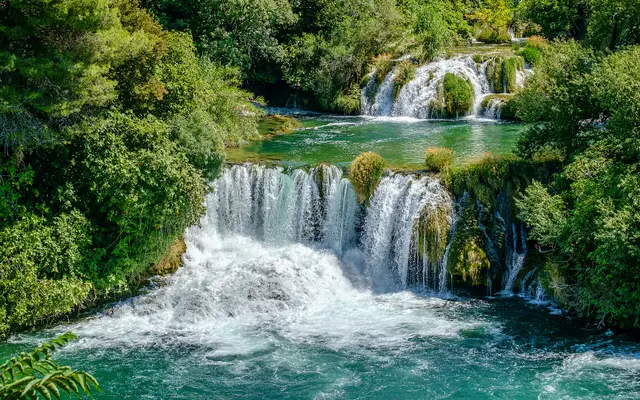
25 km · bus 60 or by carTravertine cascades and wooden walkways over the river, with Skradinski buk the largest of the falls. Swimming is no longer allowed.
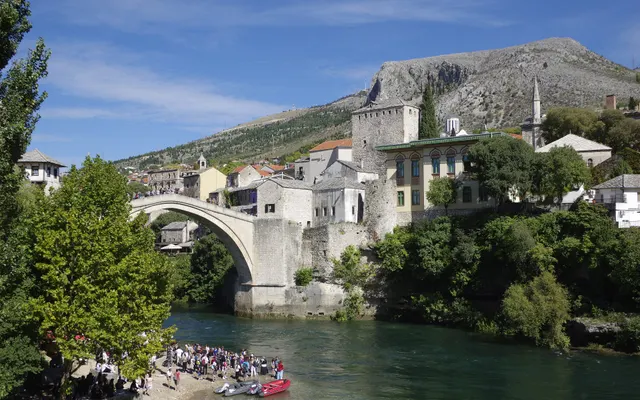
About 90 km · 1 hr 15 by carThe Old Bridge over the green Neretva, rebuilt after the war and on the UNESCO list, with divers leaping from it in summer and an Ottoman bazaar on both banks.
About 170 km · bring a passport or ID cardBeyond the palace and the beaches: what to do on the water, in the hills, on a rainy day, at the table and after dark.
Guided half-day and sunset tours paddle along Marjan's cliffs and coves, with stops for a swim. No experience needed.
Rent a board at Bačvice, Žnjan or Stobreč and paddle the calm morning water, or join an evening tour as the sun goes down.
An hour or two on a wooden boat past the Riva and round Marjan as the light turns gold; many include a drink or live music.
Charter a boat with a skipper for the day and choose your own coves on Šolta, Brač or the Pakleni islands, away from the tour boats.
A road closed to traffic loops through the forest park above the sea, shaded by pines. Rent a bike in town, or run it early in the morning.
Limestone cliffs on Marjan's south side have dozens of bolted sport routes above the sea, from easy to hard.
The bare limestone ridge behind the city, with trails to its peaks and views out to the islands. Best from October to May, never in the summer heat.
Founded in 1820, the oldest museum in Croatia: Roman stone, sarcophagi and finds from Salona, in a garden of colonnades.
In the Gothic Papalić Palace inside the walls: the city's story from Diocletian to today, with medieval arms and Renaissance rooms.
Folk costumes, jewellery and crafts of Dalmatia beside the Vestibule; climb to its terrace for a view down onto the Peristyle.
Croatian painting and sculpture from the 14th century on, in the old city hospital just outside the Golden Gate, with a café in the courtyard.
More than 500 stuffed frogs posed in little human scenes, a century-old oddity by a Hungarian taxidermist. Strange, and strangely charming.
Put on a headset and walk through Diocletian's palace as it looked in the 4th century, in the very halls where it stood.
An olive estate in the hills above Split, near Klis: an olive oil museum, gardens of Mediterranean plants and tastings of oil, jams and liqueurs.
Family wineries around Kaštela pour crljenak kaštelanski, the local grape that turned out to be Zinfandel, alongside Plavac Mali.
The Dalmatian tavern: stone walls, a wood fire and whatever the sea brought in that morning. Varoš and the old town lanes have the most.
In summer, a cinema under the pines above the beach shows films in their original language after dark.
Watch Hajduk Split, the city's beloved football club, at the shell-shaped Poljud stadium, with the Torcida singing behind the goal.
Dalmatian a cappella singing, on UNESCO's list of intangible heritage. Groups often sing under the open dome of the Vestibule.
Dalmatian food is simple and seasonal: fish from the morning market, olive oil, wild greens and slow-cooked meat. These are the dishes and drinks to look for.
PašticadaBraised beef
Beef marinated in vinegar, then slow-cooked for hours with wine, prunes and spices, and served with gnocchi on feast days.
SoparnikChard pie
A thin pie of chard, onion and parsley, baked under embers and brushed with garlic and olive oil; from Poljica, near Omiš, and EU-protected.
Crni rižotBlack risotto
Risotto made with cuttlefish and its ink, black as night and full of the taste of the sea.
PekaCooked under the bell
Lamb, veal or octopus with potatoes, slow-cooked under an iron lid heaped with embers. Order it a day ahead.
BrudetFish stew
Several kinds of fish simmered with tomato, wine and olive oil, eaten with polenta.
Riba na gradeleGrilled fish
The day's catch grilled over charcoal, with blitva on the side: chard and potatoes with olive oil and garlic.
FrituleLittle doughnuts
Bite-sized fritters with raisins and a dash of rakija, dusted with sugar; everywhere at Advent.
RožataCaramel custard
Dalmatia's crème caramel, flavoured in the old recipe with rozalin, a rose liqueur.
Splitska tortaSplit cake
A rich cake of almonds, dried figs, raisins and orange, once baked for the city's grandest celebrations.
SmokvenjakFig cake
Dried figs pressed with almonds, fennel seed and a little rakija into a dense cake, sliced with cheese or coffee.
Plavac maliDalmatia's red
Dalmatia's leading red grape, grown on the sunny slopes of Brač, Hvar and Pelješac.
PošipIsland white
A fresh, fragrant white wine from Korčula, made for grilled fish.
BevandaWine with water
Red wine mixed with still water, the everyday drink at a Dalmatian table.
ProšekDessert wine
Sweet wine made from sun-dried grapes, poured in small glasses with dessert.
TravaricaHerb rakija
Grape brandy steeped with wild herbs from the hillsides, offered to guests as a welcome.
Dobar tek!Croatian for “enjoy your meal”
Split Airport is in Kaštela, about 25 km west of the city by road. The airport shuttle bus runs to the main bus station by the ferry port, a few minutes' walk from the palace. City bus 37 also stops at the airport, but it is slower and ends at the Sukoišan terminal, a little out of the centre. A taxi or ride-hailing app takes about 30 minutes, longer in summer traffic.
Ferries and catamarans from the islands, and the ferry from Ancona in Italy, which runs all year, dock at the city port at the eastern end of the Riva. The palace is a short walk along the waterfront.
Intercity coaches and trains from Zagreb arrive at neighbouring stations next to the port, a few minutes' walk from the Riva. Suburban and some regional buses use the Sukoišan terminal instead, a little further out.
Road distance to Split
The A1 motorway links Split with Zagreb, Zadar and southern Dalmatia. Diocletian's Palace is closed to traffic, and parking near the centre is scarce and paid, so check where you will park before you arrive.
The palace, the Riva, Varoš and Bačvice are all within about 15 minutes of each other. Inside the walls the lanes are narrow and the stone is polished smooth, so wear shoes with good grip.
Promet Split runs the city and suburban buses, including lines to the Marjan beaches, Solin, Klis, Trogir and Omiš. Tickets are cheaper in the Promet Split app than from the driver. Suburban lines leave from the Sukoišan terminal.
Taxis and ride-hailing apps such as Uber and Bolt work across the city. In July and August, expect slow traffic on the coast road.
Parking around the centre is divided into zones, paid and time-limited during the day, and the closer you get to the palace, the shorter you can stay. For more than a few hours, use a public garage or car park, or choose a stay with parking.
Buy Jadrolinija tickets online or at the kiosks on the waterfront. In summer, catamaran seats sell out and car ferries fill up, so book ahead and arrive early if you have a car.
These stays have parking of their own, so you can leave the car for the whole stay.
Summer is the high season, but Split is a real city that lives all year. Spring and autumn are the best times for walking and swimming without the crowds.

The sea is still cool, but the days are warm enough to walk for hours. Easter falls in March or April, and on 7 May the city celebrates Sudamja, the feast of its patron saint Domnius, with a procession and a fair on the Riva.
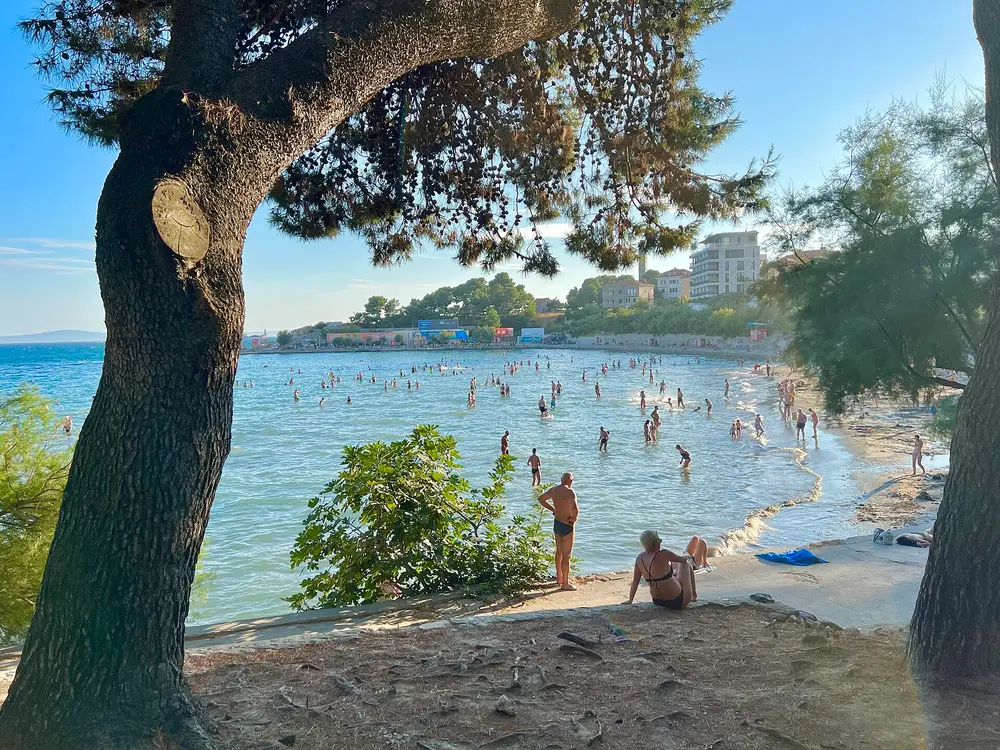
Hot days, a warm sea and late nights. From mid-July to mid-August the Split Summer Festival brings opera, theatre and concerts to open-air stages, the Peristyle among them. Book early and expect busy ferries.
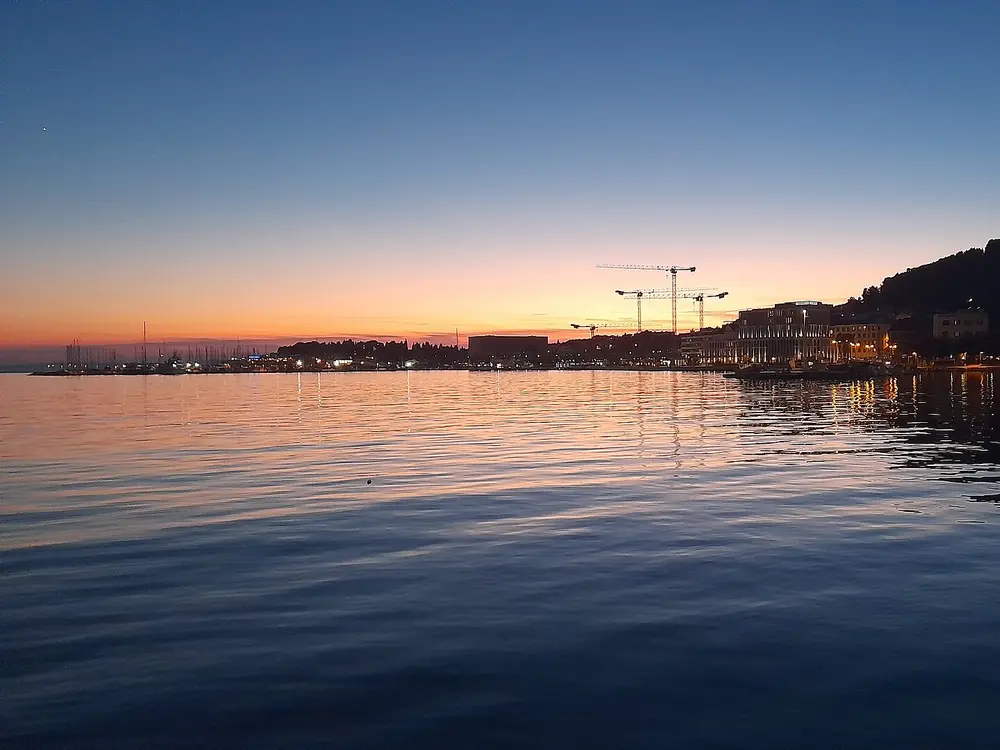
September is many locals' favourite month: the sea is still warm and the crowds have gone. Ferries run less often after the season, so check timetables before an island trip.

Mild and quiet, with sunny days between spells of rain. Advent lights up the old town and the Riva in December, the bravest play picigin at Bačvice on New Year's Day, and Carnival comes before Lent, in February or early March.
Apartments and rooms we look after ourselves, from the old town to Podstrana. Book direct for the best price.


Anything else? Our local team is happy to help.
Tell us your dates and who's coming, and our local team will suggest the stays that fit.
Hi! We're a family of four, 12 to 19 July, looking for a flat near a beach, with parking.
We reply in


 D&A Property Management
We use a few cookies to run the site and keep our forms free of spam. With your OK, we also use Google Analytics and Google Ads to see how the site is used and which ads lead to bookings. You can change your choice at any time.
Cookie settingsEssential cookies and spam protection are always on, because the site and the contact form need them. Analytics and ads are up to you.
Essential
Keep the site working: your language, your cookie choice, the stays you picked and secure checkout with Stripe.
Spam protection
Google reCAPTCHA checks that contact form messages come from people, not bots. It looks at how the page is used, so Google receives your IP address and browser details.
Analytics and ads
Google Analytics counts visits and shows which pages people use. Google Ads tells us when a visit from one of our ads ends in a booking. We don't use them to show you ads on other sites.